
Emirati Gahwa
Arabic coffee · القهوة
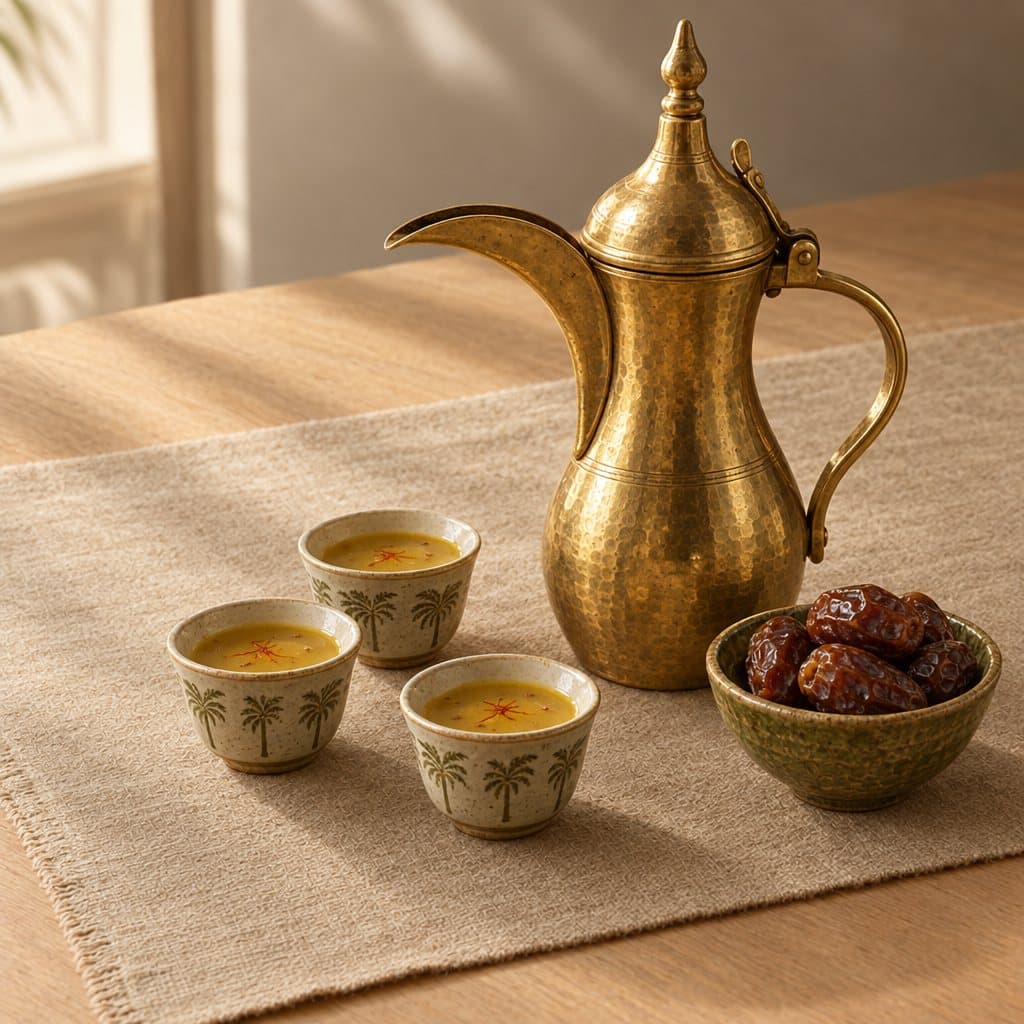
Lightly roasted Arabic coffee with cardamom and saffron, poured from the dallah into small cups with dates — Emirati hospitality begins here.
Story & History
In the Emirati home, gahwa is not merely a drink but a complete ritual of hospitality: lightly roasted beans are freshly ground, boiled, perfumed with cardamom and saffron, and poured into the dallah. The server pours with the right hand, starting with the most senior guest; the cup is filled to a third, and shaking it signals you have had enough. Arabic coffee and its rituals are inscribed on UNESCO's Intangible Cultural Heritage list.
Occasions
- Daily hospitality
- Majlis
- Fuwala
- Eid and occasions
Core Ingredients
- For one dallah (about ½ litre):
- Water, ½ litre
- Ground Emirati coffee, 1 finjan
- Cardamom: either ½ tsp ground, or 3 whole pods (one or the other, not both)
- Saffron, 2 to 3 threads
Traditional Method Outline
- Bring the water to a boil, add the coffee and let it boil for 2 to 3 minutes. If using ground cardamom, add it to the boiling coffee.
- Place the saffron threads in the serving dallah. If using whole cardamom pods instead, place them in the dallah with the saffron.
- Strain the coffee into the serving dallah, leaving the grounds behind.
- Serve hot.
Serving
Hold the dallah in the left hand and offer the finjan with the right. Serve the eldest or most senior guest first, then continue around the group. Pour a small amount, roughly a quarter of the cup; the finjan is refilled, not filled. Stay close and refill when the cup is empty; it is customary to drink at least one cup and usually no more than three. When a guest gently shakes the empty cup from side to side, they have had enough: take the cup and do not pour again. Serve gahwa fresh and hot, with dates, ideally UAE-grown varieties such as Khalas, Khenaizi or Lulu.
Recipe by
Documentation
This entry is awaiting review by a specialist chef or heritage expert. It is not presented as a settled reference.